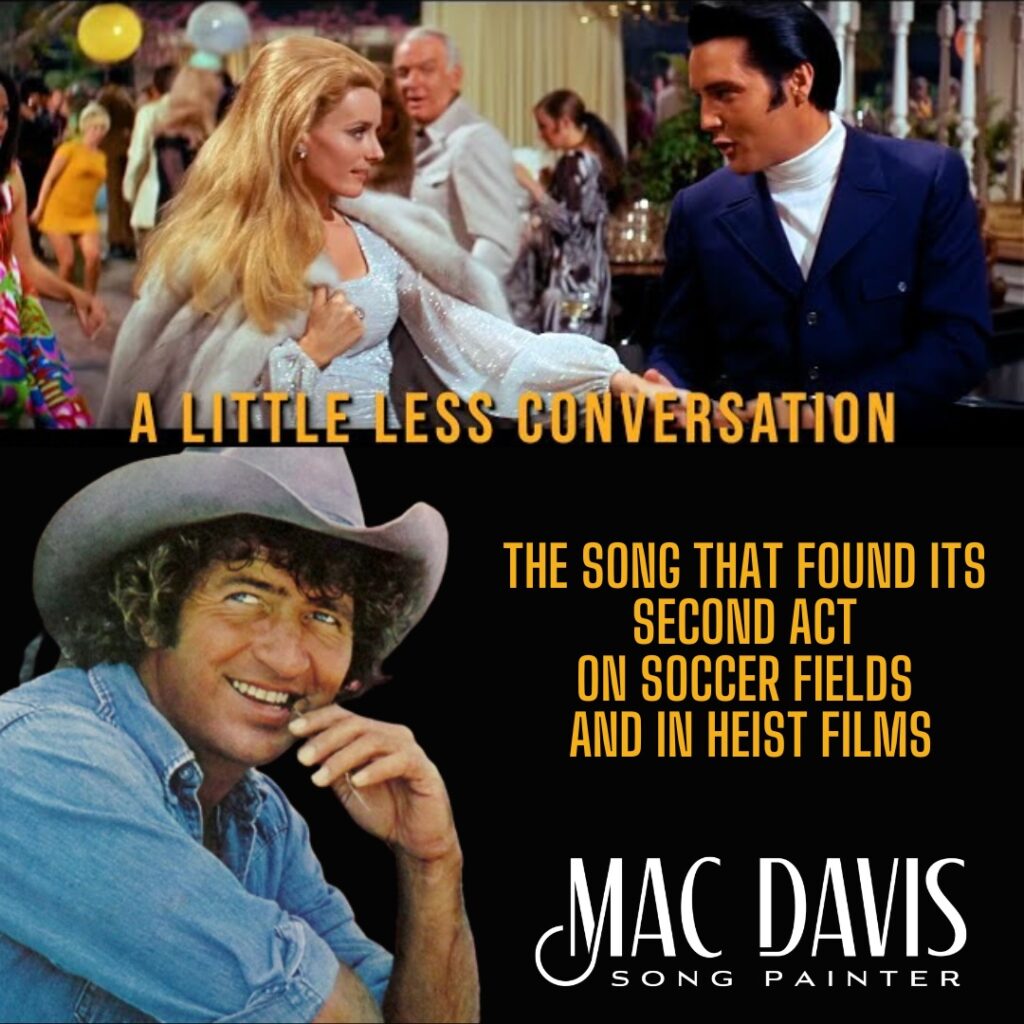
 The Second Life of a Classic
Nike executives and Hollywood filmmakers rarely confer, but they both picked the same vintage tune for modern milestones: Mac Davis’s “A Little Less Conversation.” The narrative turns when Hollywood directors and a Nike executive decide that this decades-old tune is exactly what modern audiences didn’t know they needed, albeit at slightly different times.
Ocean’s 11: The Prelude to a Revival
First, the song catches the ear of the creators of “Ocean’s Eleven,” the Hollywood heist film released in 2001 with an ensemble cast that reads like a Who’s Who of the film industry: George Clooney; Brad Pitt; Julia Roberts; Matt Damon; Don Cheadle; Bernie Mac; Andy Garcia; Elliot Gould; Carl Reiner. Just like that, “A Little Less Conversation” begins its quiet renaissance as the backdrop of clever capers and intricate plot twists, its swagger in perfect step with Danny Ocean’s crew.
Enter Nike, Exit Obscurity
Next comes a masterstroke by a Nike executive, who envisions a $90 million World Cup Soccer campaign for the following year, 2002. Enter Junkie XL, the producer known for his skill in giving old classics a modern shine. He revamps the song in a way that keeps its original flair intact while making it irresistibly new. This remixed version, credited to “Elvis vs. JXL,” catapults the song back into the limelight, leading it to become a number-one hit in over 20 countries.
The Lights of Las Vegas
In 2003, “A Little Less Conversation” lands another noteworthy gig, this time as the opening theme to the television show “Las Vegas,” an NBC drama focusing on the intricacies and complexities of running a high-end hotel and casino. Starring James Caan, Josh Duhamel, Nikki Cox, and a host of other talented actors, the series gives the song another lease on life, introducing it to television audiences and keeping its rhythmic heartbeat in public consciousness.
Mac Davis: The Last Informed, the First Celebrated
Then there’s Mac Davis, answering a phone call from a friend congratulating him on his “Elvis hit” and wondering what year it is. “Maybe you haven’t heard…Elvis is dead,” he quips. And yet, as if denying the very rules of time, his song is alive and well, skyrocketing to number one in 26 countries and becoming an anthem for both soccer fans and moviegoers, not to mention its weekly television feature.
Not a Revival, A Continuation
It would be easy, even tempting, to chalk this all up to good luck. But as Mac Davis put it, he was “very lucky and very happy,” a phrase that hardly captures the deliberate renaissance his classic tune has undergone. This isn’t a fluke or a stroke of luck; it’s more like a well-executed second act, carefully staged by those who understood the song’s timeless appeal.
The Song that Never Left
In retrospect, “A Little Less Conversation” never really went away. It simply waited in the wings for the right cues: a high-rolling, star-studded heist film followed by a high-stakes advertising campaign and then a hit television series. It’s neither a comeback story nor a tale of accidental rediscovery. It’s a story of enduring artistry meeting keen recognition, catalyzed by those smart enough to see its timeless relevance. And for Mac Davis, it’s further proof, if any were needed, that true art never really ages; it just waits for the next perfect moment to take the stage.
 Mac Davis had always known how to captivate an audience, be it through his riveting performances or the charm he carried with him. But there was a secret that trailed him throughout his career—a love affair, so to speak, but one that was far from romantic. It was with alcohol.