Celebrating the Legacy of a Music Icon, the Fund’s First Round of Support Focuses on Key Initiatives in Music Education, Healthcare, and Artistic Storytelling
NASHVILLE, January 18, 2024 – Celebrating what would have been legendary singer/songwriter Mac Davis’ 81st birthday on January 21, Song Painter: The Mac Davis Fund for the Art of Songwriting, administered by the Community Foundation of Middle Tennessee, proudly announced its first substantial grant distribution. Embodying the spirit and passion of Davis’ lifelong dedication to music and songwriting, four deserving organizations have been selected to each receive a grant of $5,000.
 Music Health Alliance: As an advocate for the health and well-being of music industry professionals, Music Health Alliance offers crucial healthcare services, including mental health resources. This grant underscores the fund’s commitment to the holistic support of the music community, a cause close to Davis’ heart.
The Opry Trust Fund: Renowned for its support of the country music industry, the Opry Trust Fund aligns with Davis’ deep roots in country music. This grant aids the fund’s mission to provide financial assistance to members of the country music community facing hardships, reflecting Davis’ enduring support for the country music family.
The Words and Music Program at the Country Music Hall of Fame and Museum: This innovative program educates and inspires young songwriters, fostering connections with Nashville’s vibrant music scene. The grant mirrors Davis’ belief in the power of education and mentorship in music, encouraging creative expression in future generations.
A Vote of Her Own; a new musical: Supported by The Creative Community, Inc., this musical narrates the historic campaign for women’s suffrage in Nashville. The grant reflects the fund’s commitment to the art of storytelling through song and its support in the ongoing fight for gender equality, resonating with Davis’ multifaceted artistic legacy.
“Mac’s legacy transcended the bounds of music creation; it was profoundly anchored in nurturing talent, weaving narratives, and generating a significant positive impact,” stated Lisë Davis, Mac’s wife and founder of Mac Davis Enterprises. “To him, songwriting was a sublime form of creativity, akin to encapsulating a fleeting moment and converting it into an everlasting feeling. These grants embody his vision and values, serving as investments in the future of songwriting and the arts, aligning with what Mac cherished most.”
Rondal Richardson, Senior Entertainment and Donor Services Liaison at Community Foundation of Middle Tennessee shared his thoughts on Song Painter’s community-building efforts: “Getting to be a part of the conversation around community-building with Mac Davis’ family is among the greatest treasures we have had as a partner to this important work. Mac’s generosity, inclusivity and nurturing love for the songwriting community lives on forever as a result of the thoughtful, hope-filled work of Lise and her family. They are servant leaders of the highest order, and we are honored to get to amplify this mission, today and for generations to come.”
“Mac’s esteemed songwriting legacy and passion for education is carried forward through our Words & Music program, which teaches thousands of students how to write original song lyrics every year,” said Lisa Purcell, executive vice president of external affairs for the Country Music Hall of Fame and Museum. “We are extremely grateful to Song Painter: The Mac Davis Fund for the Art of Songwriting, as well as the Community Foundation of Middle Tennessee, for helping us continue to promote language arts through music – and inspire our next generation of creative writers and thinkers.”
“At the heart of every great musical are the songs : songs that make you laugh, make you cry, songs that inspire, songs that move the story you are telling in a way that nothing else can. We are touched and elated at the grant from Song Painter: The Mac Davis Fund for the Art of Songwriting that will help enable the performance in Nashville of A Vote of Her Own,” said A Vote of Her Own songwriters, Candace Corrigan and Janne Henshaw. “We both grew up listening to Mac Davis songs, and we are delighted to celebrate his legacy. It means so much to us.”
“Music Health Alliance is profoundly grateful for the privilege to honor Mac’s monumental legacy through our mission to Heal The Music,” said Tatum Hauck Allsep, Founder & CEO, Music Health Alliance. “The Song Painter grant will provide access to essential and life-saving healthcare, mental health support, senior care, dental health and more, echoing the nurturing spirit that Mac embodied for the songwriter and the song. We loved Mac, and we are immensely grateful to Lisë for this impactful grant. Happy 81st Mac! Your absence is deeply felt and you are greatly missed!”
Established to honor the legacy of Mac Davis, Song Painter: The Mac Davis Fund for the Art of Songwriting promotes appreciation for the craft and artistry of songwriting. The Fund emphasizes songwriting’s role as a universal language, transcending cultural and geographical boundaries. It focuses on supporting underrepresented songwriters and recognizing organizations that understand the significant role music plays in human culture.
Davis, an iconic entertainer, singer, and actor, first gained widespread recognition when Elvis Presley recorded his poignant composition ‘In The Ghetto,’ which marked the beginning of a remarkable songwriting career. Davis continued to create hits for Presley, such as ‘Memories,’ ‘Don’t Cry Daddy,’ and ‘A Little Less Conversation,’ and extended his talent to artists like Bobby Goldsboro, Vikki Carr, Kenny Rogers, Nancy Sinatra, Bruno Mars, Weezer, and Avicii. A proud member of both the National Songwriters Hall of Fame and the Nashville Songwriters Hall of Fame, Davis’s songs were recorded by legends including Elvis Presley, Dolly Parton, and Ray Price. His career is adorned with achievements including 27 BMI Awards, over 3,550,000 albums sold, the 1974 Academy of Country Music’s Entertainer of the Year Award, and the 1975 People’s Choice Award for Favorite Male Singer.
Fans can explore the newly launched macdavis.com website, featuring a monthly blog, never-before-seen photos, videos, and stories from his extensive music, songwriting, and acting career. Exclusive Mac Davis merchandise is also available for purchase, with all proceeds supporting the Song Painter Fund.
For more information and to support Song Painter: The Mac Davis Fund for the Art of Songwriting, please visit Community Foundation of Middle Tennessee.
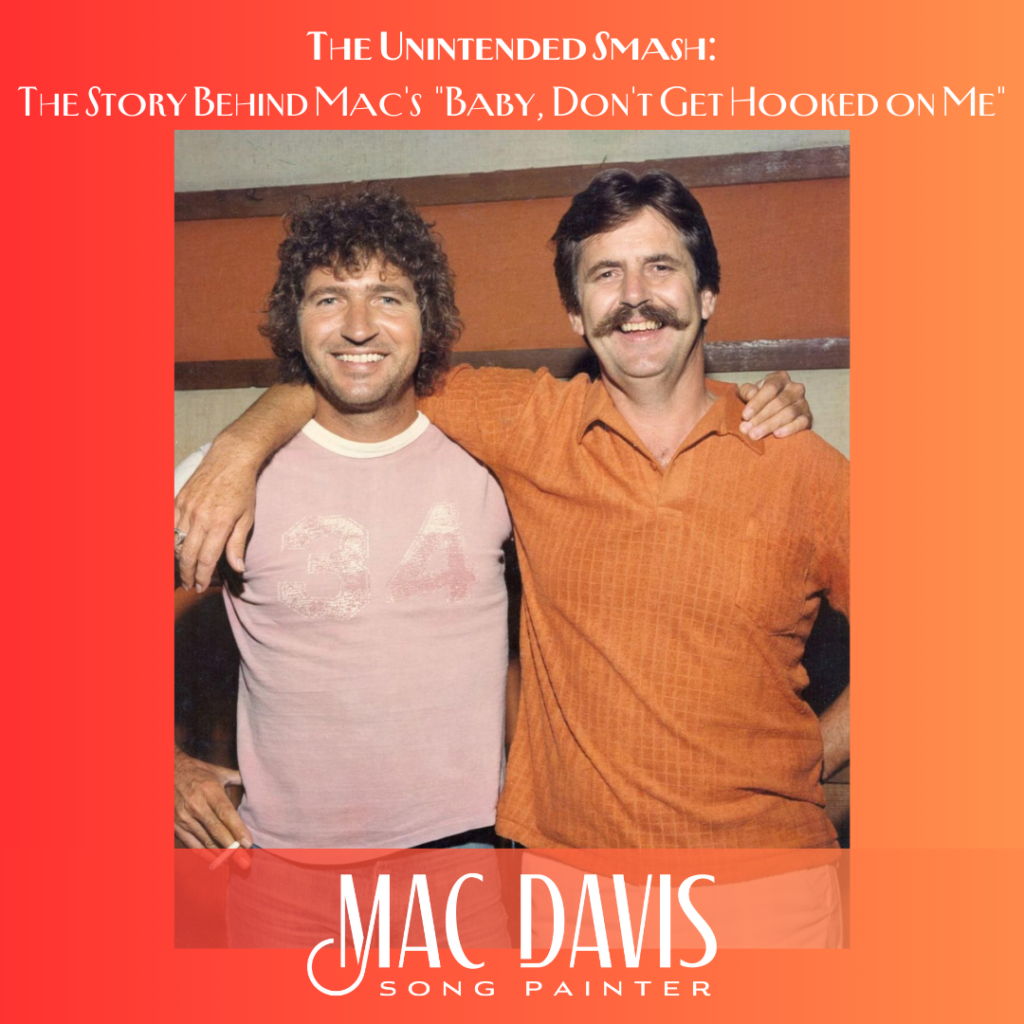 In the unpredictable and often fickle world of music, where formulaic recipes for hits are often a fool’s errand, sometimes success arrives in the most unexpected forms. Such is the tale of Mac Davis’s 1972 smash hit “Baby, Don’t Get Hooked on Me,” a song that began as a joke and ended up topping the charts, albeit with a cloud of controversy. This story perfectly embodies the capricious nature of creativity, the irony of intention, and the influence of socio-cultural conversations on art.
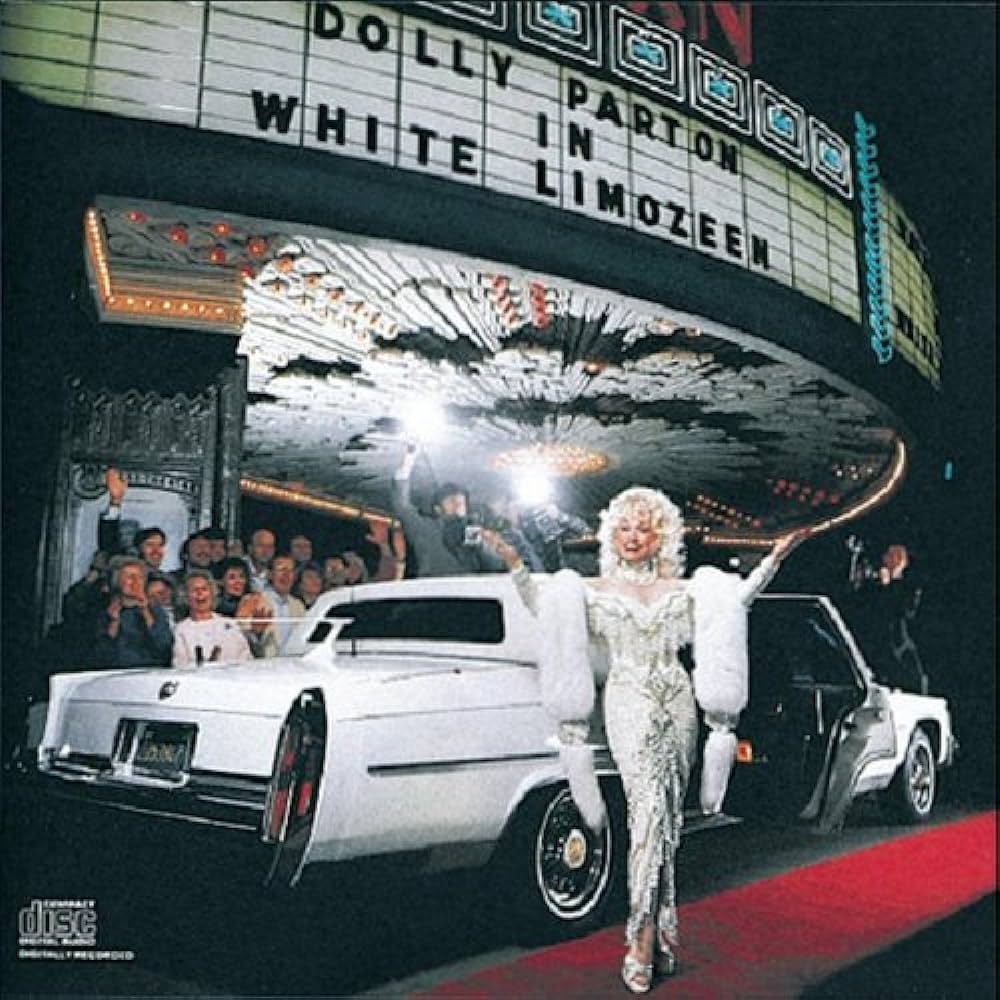 The idea of “making it” has often been symbolized by the glitz and glamor of Hollywood, the big break, or even the white limousine—gleaming, opulent, and stretched beyond reason. What is less spoken of, however, is the irony that often accompanies success.