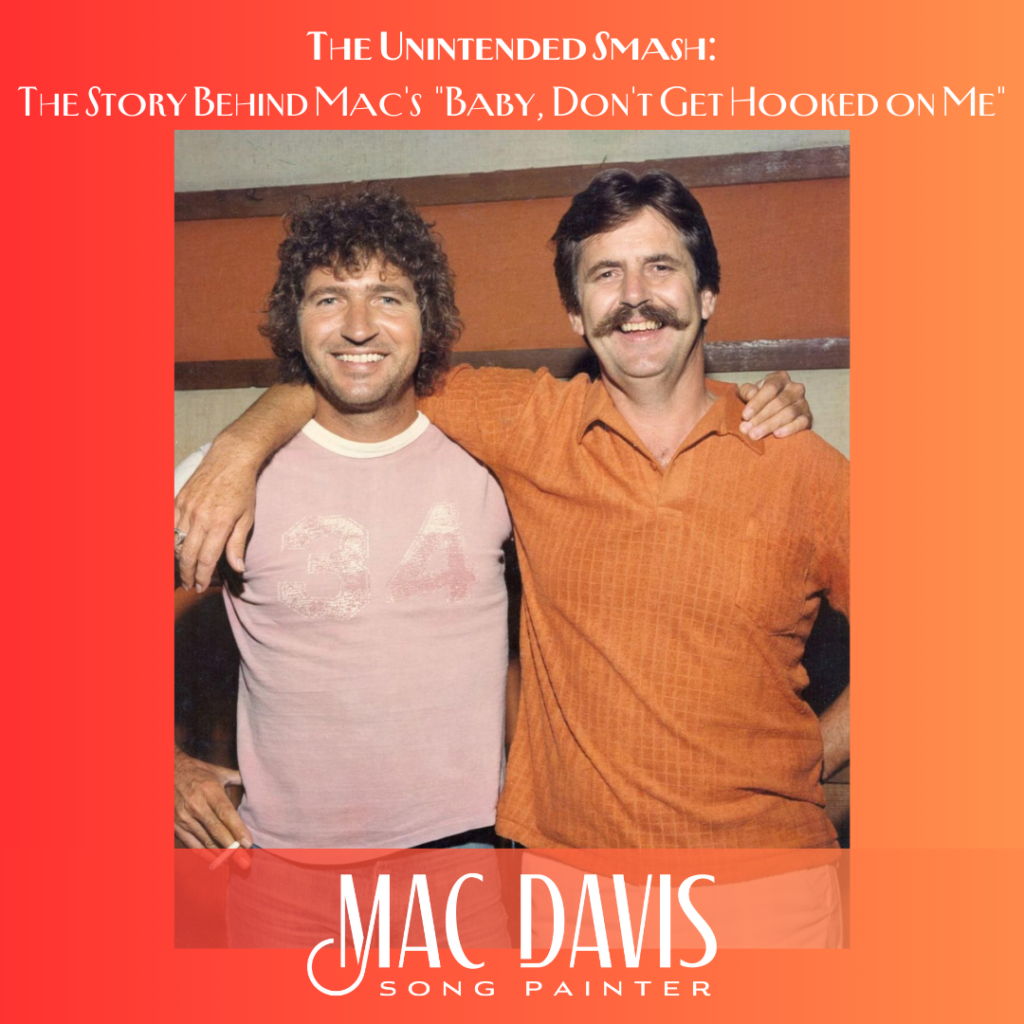
 In the unpredictable and often fickle world of music, where formulaic recipes for hits are often a fool’s errand, sometimes success arrives in the most unexpected forms. Such is the tale of Mac Davis’s 1972 smash hit “Baby, Don’t Get Hooked on Me,” a song that began as a joke and ended up topping the charts, albeit with a cloud of controversy. This story perfectly embodies the capricious nature of creativity, the irony of intention, and the influence of socio-cultural conversations on art.
The Genesis of a Joke
The story begins with Mac in the recording studio with Rick Hall, his producer at the time. Hall was frustrated with Davis for “giving away all [his] hook songs” and leaving him with what he considered “sugary ballads” to work with. Davis, incensed by the critique, decided to retaliate in a humorous way. He walked the famous stairs of FAME Recording Studios up to Hall’s office, pulled out a legal pad, and scribbled down what he thought was a mockingly simple hook song.
Upon presenting the hook to Hall while winking at the other musicians, Davis was met with unexpected approval. Despite the irony of its conception, Hall deemed it a “smash” and insisted they record it right away—even before the rest of the lyrics were written. Thus, the track was cut, and Davis found himself returning to his hotel to complete the lyrics for a song he never intended to take seriously.
The Unexpected Reception
When the song was released, it did indeed become a smash, climbing its way to the top of the charts. But along with its commercial success came a wave of criticism. The song was labeled “chauvinist” and even earned the dubious honor of becoming Ms. Magazine’s “chauvinist pig song of the year” for 1972. Even Davis himself — not a chauvinist by any measure — was initially uncomfortable with the message of the song, seeing it as a bit “chauvinistic” even before it became a hit.
Cultural Context and Relativity
It’s worth noting that the song’s commercial success and subsequent backlash can’t be isolated from the era in which it was released. The early ’70s were a pivotal time for women’s rights, with the feminist movement gaining momentum. While it topped the charts, the song simultaneously became a cultural talking point, embodying the conflicting values and conversations of its time.
The Irony of Creation
Mac Davis’s experience underscores the sometimes ironic nature of creative endeavors. A song penned in jest and initially perceived as a shallow hook achieved both commercial success and sparked significant cultural dialogue, albeit not necessarily in the way the artist intended.
As Davis humorously noted, he was grateful when another controversial song—”You’re Having My Baby” by Paul Anka—came along and took some of the heat off him. This too serves as a reminder that the cultural lens through which art is viewed is continually shifting, with one era’s controversy often supplanted by another’s.
The story of “Baby, Don’t Get Hooked on Me” is a lesson in the unpredictability of art and public reception. It shows us that even when an artist creates with a particular intent, once that creation is out in the world, it takes on a life of its own—sometimes for better, sometimes for worse, but always adding a unique chapter to the narrative of our collective cultural history.
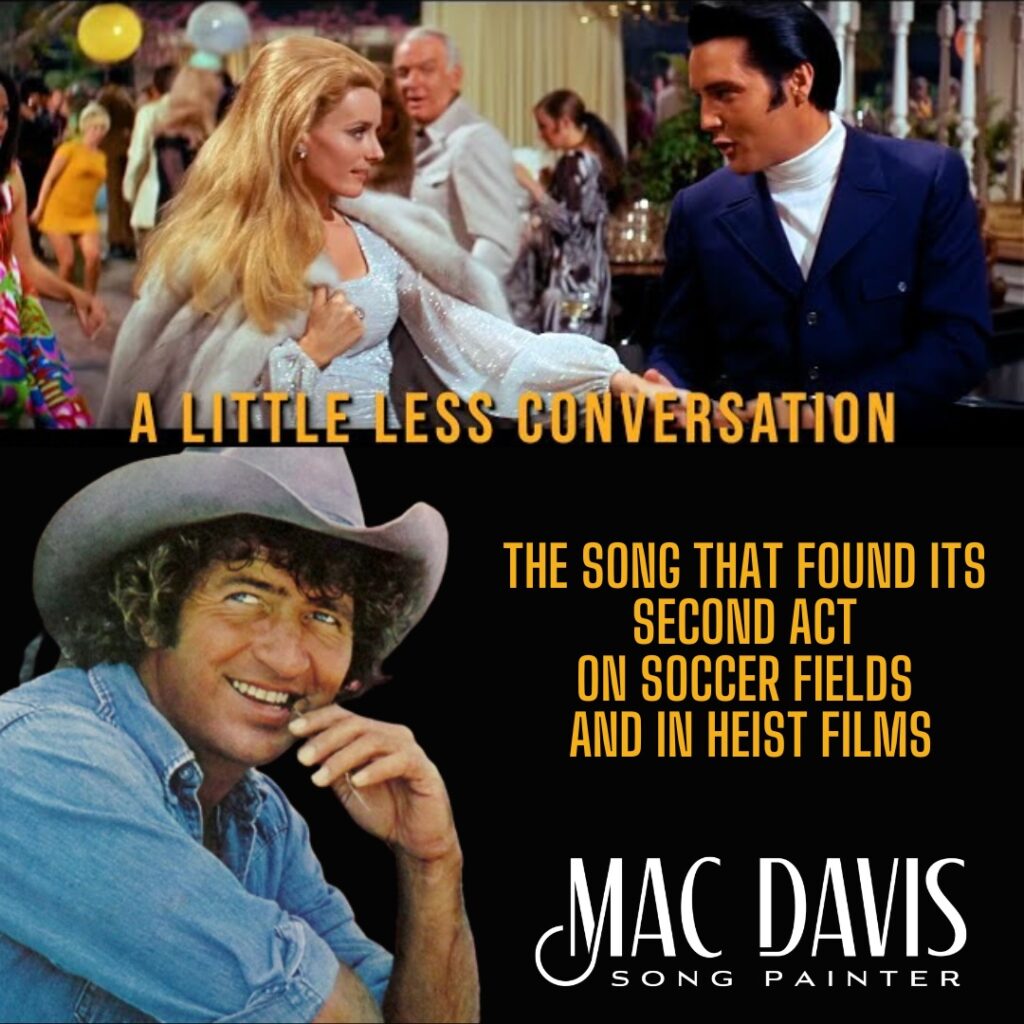 The Second Life of a Classic
 Mac Davis had always known how to captivate an audience, be it through his riveting performances or the charm he carried with him. But there was a secret that trailed him throughout his career—a love affair, so to speak, but one that was far from romantic. It was with alcohol.
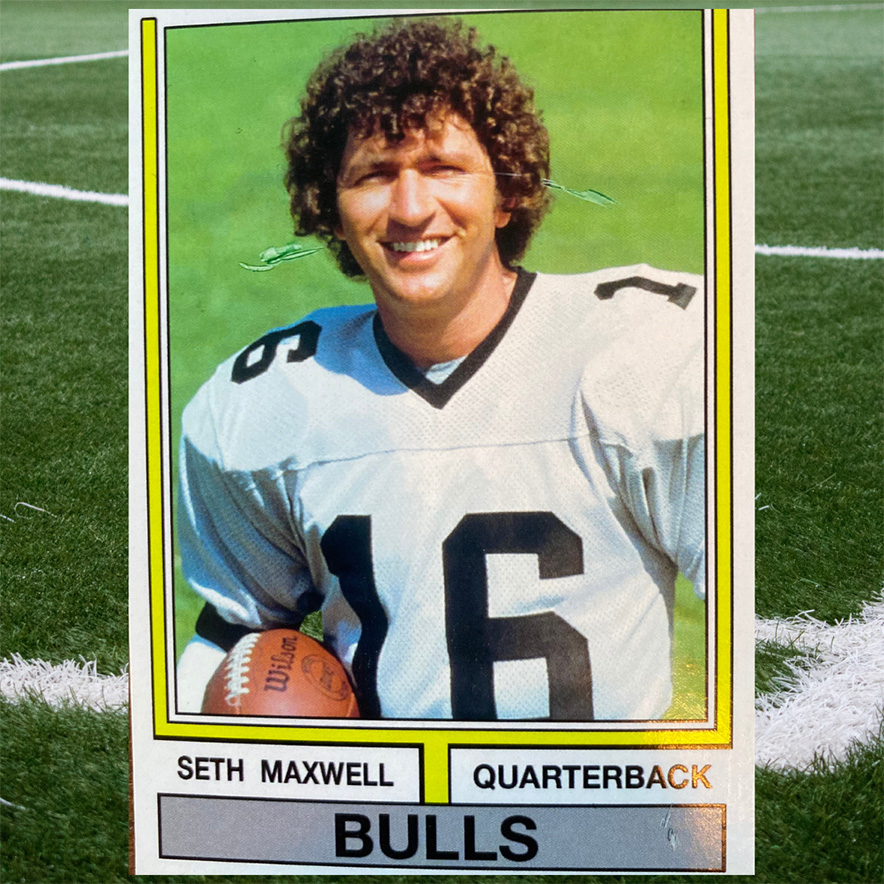 “North Dallas Forty” is not just a window into the world of professional football. It’s a reflection of the America of the 1970s, a time when racial divides scarred the very soul of the nation and even spilled onto the football fields. Behind every pass, touchdown, and tackle was a tale of segregation, ambition, politics, and change. The movie’s strength lies in its authenticity, drawn directly from the semi-autobiographical novel by Peter Gent, a former player for the Dallas Cowboys from 1964 to 1968.
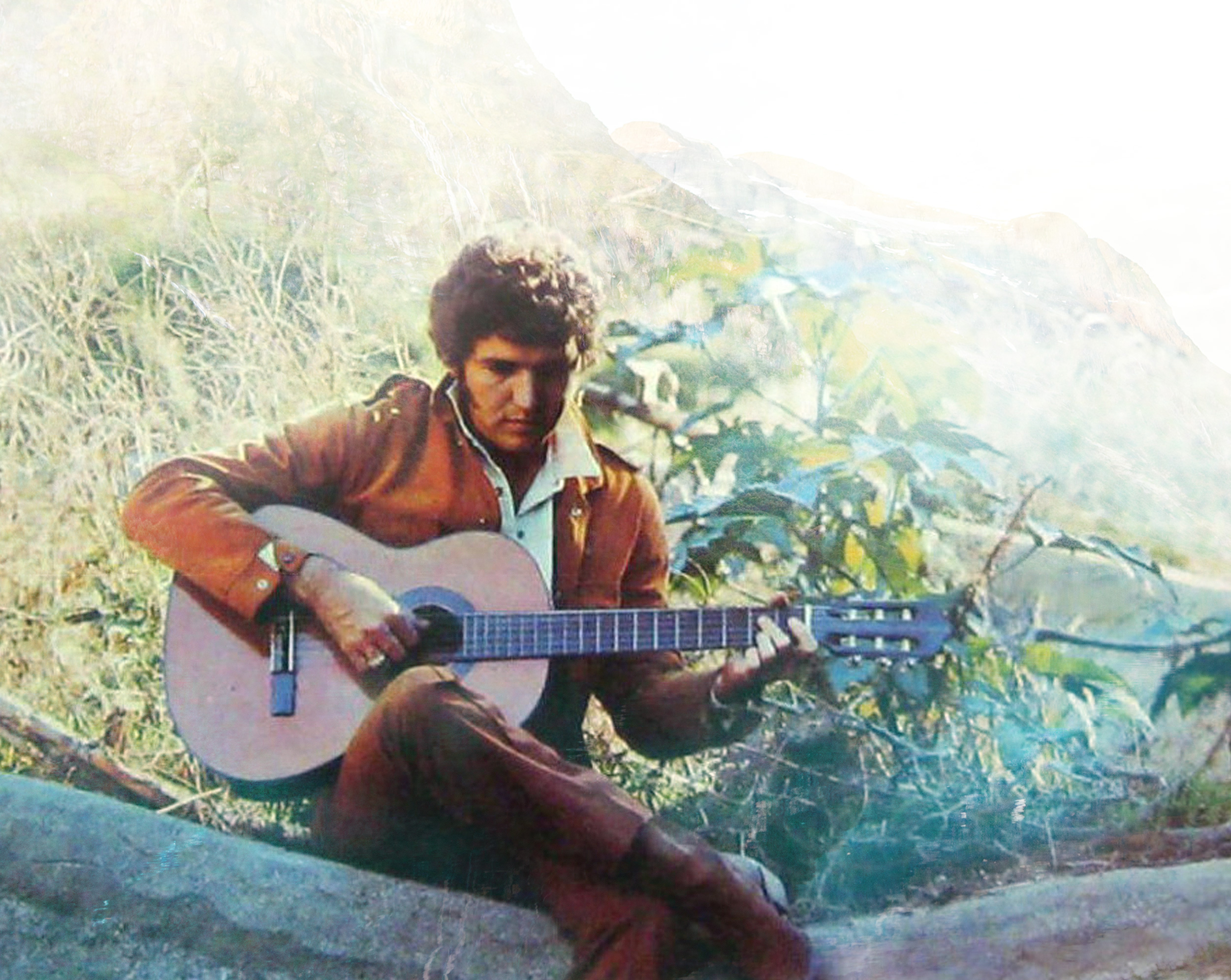 In the world of music and beyond, Mac Davis’ legacy is truly undeniable. His journey began as a gifted songwriter in the vibrant 1960s, crafting soulful melodies that resonated deeply with fans and fellow musicians alike. But it was his collaboration with the legendary Elvis Presley that truly set him apart as a force to be reckoned with in the music industry.