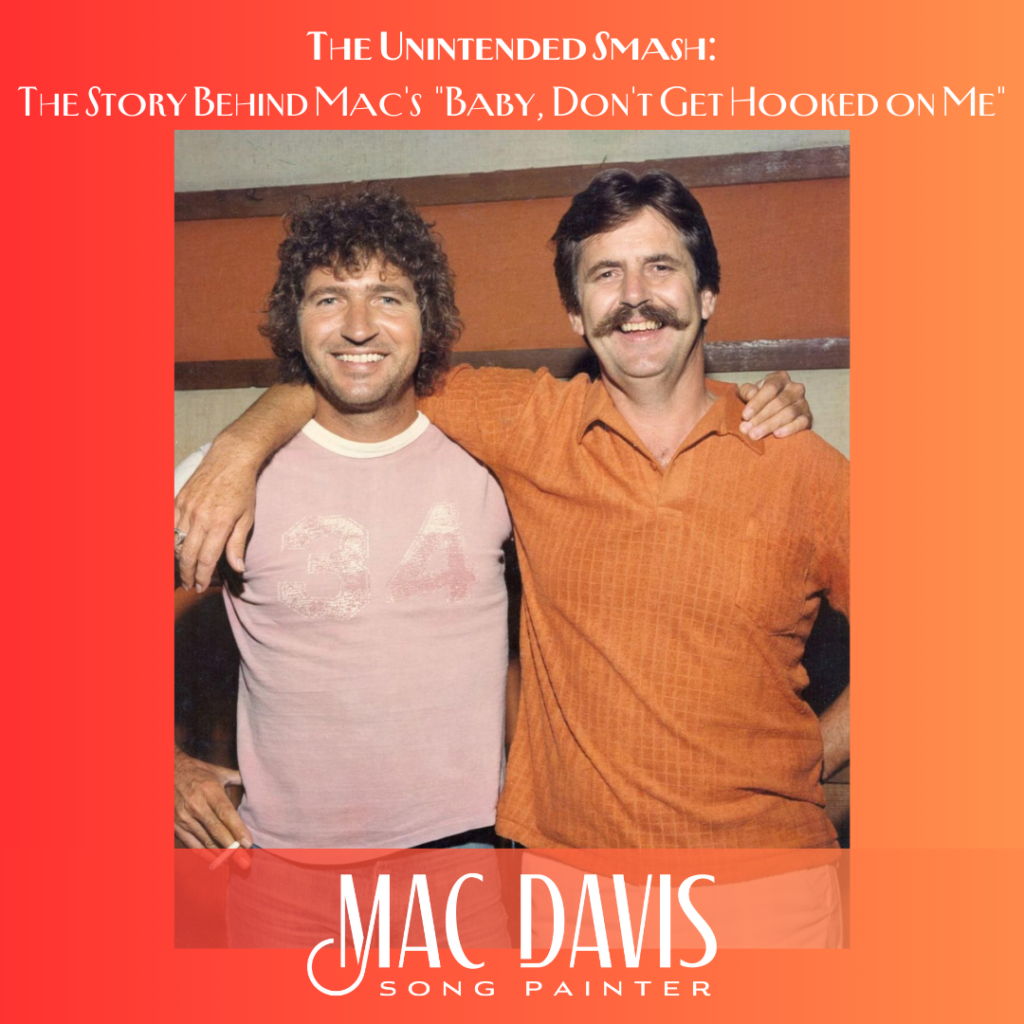
The Unintended Smash: The Story Behind Mac’s “Baby, Don’t Get Hooked on Me”

The Story Behind "Baby Don't Get Me Hooked"In the unpredictable and often fickle world of music, where formulaic recipes for hits are often a fool’s errand, sometimes success arrives in the most unexpected forms. Such is the tale of Mac Davis’s 1972 smash hit “Baby, Don’t Get Hooked on Me,” a song that began as a joke and ended up topping the charts, albeit with a cloud of controversy. This story perfectly embodies the capricious nature of creativity, the irony of intention, and the influence of socio-cultural conversations on art.
The Genesis of a Joke

The story begins with Mac in the recording studio with Rick Hall, his producer at the time. Hall was frustrated with Davis for “giving away all [his] hook songs” and leaving him with what he considered “sugary ballads” to work with. Davis, incensed by the critique, decided to retaliate in a humorous way. He walked the famous stairs of FAME Recording Studios up to Hall’s office, pulled out a legal pad, and scribbled down what he thought was a mockingly simple hook song.

Upon presenting the hook to Hall while winking at the other musicians, Davis was met with unexpected approval. Despite the irony of its conception, Hall deemed it a “smash” and insisted they record it right away—even before the rest of the lyrics were written. Thus, the track was cut, and Davis found himself returning to his hotel to complete the lyrics for a song he never intended to take seriously.

The Unexpected Reception

When the song was released, it did indeed become a smash, climbing its way to the top of the charts. But along with its commercial success came a wave of criticism. The song was labeled “chauvinist” and even earned the dubious honor of becoming Ms. Magazine’s “chauvinist pig song of the year” for 1972. Even Davis himself — not a chauvinist by any measure — was initially uncomfortable with the message of the song, seeing it as a bit “chauvinistic” even before it became a hit.

Cultural Context and Relativity

It’s worth noting that the song’s commercial success and subsequent backlash can’t be isolated from the era in which it was released. The early ’70s were a pivotal time for women’s rights, with the feminist movement gaining momentum. While it topped the charts, the song simultaneously became a cultural talking point, embodying the conflicting values and conversations of its time.

The Irony of Creation

Mac Davis’s experience underscores the sometimes ironic nature of creative endeavors. A song penned in jest and initially perceived as a shallow hook achieved both commercial success and sparked significant cultural dialogue, albeit not necessarily in the way the artist intended.
As Davis humorously noted, he was grateful when another controversial song—”You’re Having My Baby” by Paul Anka—came along and took some of the heat off him. This too serves as a reminder that the cultural lens through which art is viewed is continually shifting, with one era’s controversy often supplanted by another’s.

The story of “Baby, Don’t Get Hooked on Me” is a lesson in the unpredictability of art and public reception. It shows us that even when an artist creates with a particular intent, once that creation is out in the world, it takes on a life of its own—sometimes for better, sometimes for worse, but always adding a unique chapter to the narrative of our collective cultural history.

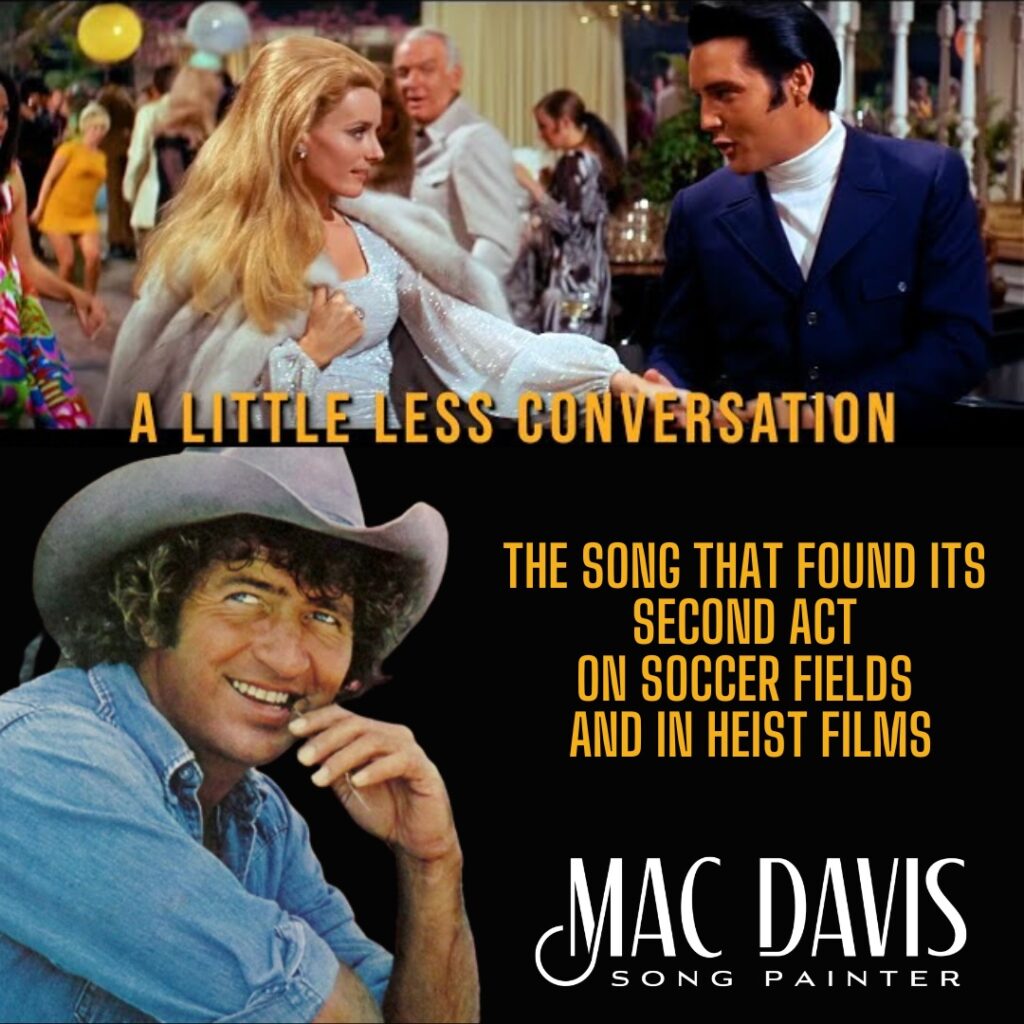
“A Little Less Conversation”: The Song that Found Its Second Act on Soccer Fields and in Heist Films

A Little Less Conversation ImageThe Second Life of a Classic

Nike executives and Hollywood filmmakers rarely confer, but they both picked the same vintage tune for modern milestones: Mac Davis’s “A Little Less Conversation.” The narrative turns when Hollywood directors and a Nike executive decide that this decades-old tune is exactly what modern audiences didn’t know they needed, albeit at slightly different times.

Ocean’s 11: The Prelude to a Revival

First, the song catches the ear of the creators of “Ocean’s Eleven,” the Hollywood heist film released in 2001 with an ensemble cast that reads like a Who’s Who of the film industry: George Clooney; Brad Pitt; Julia Roberts; Matt Damon; Don Cheadle; Bernie Mac; Andy Garcia; Elliot Gould; Carl Reiner. Just like that, “A Little Less Conversation” begins its quiet renaissance as the backdrop of clever capers and intricate plot twists, its swagger in perfect step with Danny Ocean’s crew.

Enter Nike, Exit Obscurity

Next comes a masterstroke by a Nike executive, who envisions a $90 million World Cup Soccer campaign for the following year, 2002. Enter Junkie XL, the producer known for his skill in giving old classics a modern shine. He revamps the song in a way that keeps its original flair intact while making it irresistibly new. This remixed version, credited to “Elvis vs. JXL,” catapults the song back into the limelight, leading it to become a number-one hit in over 20 countries.

The Lights of Las Vegas

In 2003, “A Little Less Conversation” lands another noteworthy gig, this time as the opening theme to the television show “Las Vegas,” an NBC drama focusing on the intricacies and complexities of running a high-end hotel and casino. Starring James Caan, Josh Duhamel, Nikki Cox, and a host of other talented actors, the series gives the song another lease on life, introducing it to television audiences and keeping its rhythmic heartbeat in public consciousness.

Mac Davis: The Last Informed, the First Celebrated

Then there’s Mac Davis, answering a phone call from a friend congratulating him on his “Elvis hit” and wondering what year it is. “Maybe you haven’t heard…Elvis is dead,” he quips. And yet, as if denying the very rules of time, his song is alive and well, skyrocketing to number one in 26 countries and becoming an anthem for both soccer fans and moviegoers, not to mention its weekly television feature.

Not a Revival, A Continuation

It would be easy, even tempting, to chalk this all up to good luck. But as Mac Davis put it, he was “very lucky and very happy,” a phrase that hardly captures the deliberate renaissance his classic tune has undergone. This isn’t a fluke or a stroke of luck; it’s more like a well-executed second act, carefully staged by those who understood the song’s timeless appeal.

The Song that Never Left

In retrospect, “A Little Less Conversation” never really went away. It simply waited in the wings for the right cues: a high-rolling, star-studded heist film followed by a high-stakes advertising campaign and then a hit television series. It’s neither a comeback story nor a tale of accidental rediscovery. It’s a story of enduring artistry meeting keen recognition, catalyzed by those smart enough to see its timeless relevance. And for Mac Davis, it’s further proof, if any were needed, that true art never really ages; it just waits for the next perfect moment to take the stage.

From Stage Lights to Spotting the Light: Mac Davis’ Journey from Alcoholism to Sobriety

Mac Davis Live ImageMac Davis had always known how to captivate an audience, be it through his riveting performances or the charm he carried with him. But there was a secret that trailed him throughout his career—a love affair, so to speak, but one that was far from romantic. It was with alcohol.
As a young 13-year-old in Lubbock, Texas, Davis began drinking beer. The buzz gave him a sense of invincibility, making him feel “Ten feet tall and bulletproof.” Alcohol became a mainstay in his life, his “mistress,” subtly but steadily weaving its way into the fabric of his professional and personal worlds. It was a complicated relationship.
 
The Culture of Booze

As Davis’ career in the entertainment industry blossomed, so did his exposure to an environment where alcohol flowed like water. The glittering lights of Las Vegas, the sets of TV shows and movies, the Rat Pack—these were spaces where everyone seemed to always have a drink in hand. Davis prided himself on his ability to handle his liquor well, a dangerous skill that made it even more challenging for people to see that he was struggling.

Early Signs and Denial

While on the grueling 1970-71 tour, Davis had a moment that could have served as a wakeup call. During a solo performance, he thanked the audience for a “standing ovulation,” a statement considered distasteful at the time. But the real issue wasn’t the slip of the tongue; it was his inability to recognize alcohol’s impact on his life. Davis continued to believe he had it all under control, even as he drank through concerts, TV shows, and family life.

Crossing Lines and Breaking Trust

As time passed, Davis’ legendary tolerance for alcohol started to wane. He became belligerent at performances, sometimes repeating the same joke twice, unaware that he had already told it. The moment that truly shook him came during an event at Frank Sinatra’s home, where he made a poorly-timed joke about Jilly Rizzo, Sinatra’s right-hand man. Davis knew he had crossed a line that could never be uncrossed.

A Wake-up Call

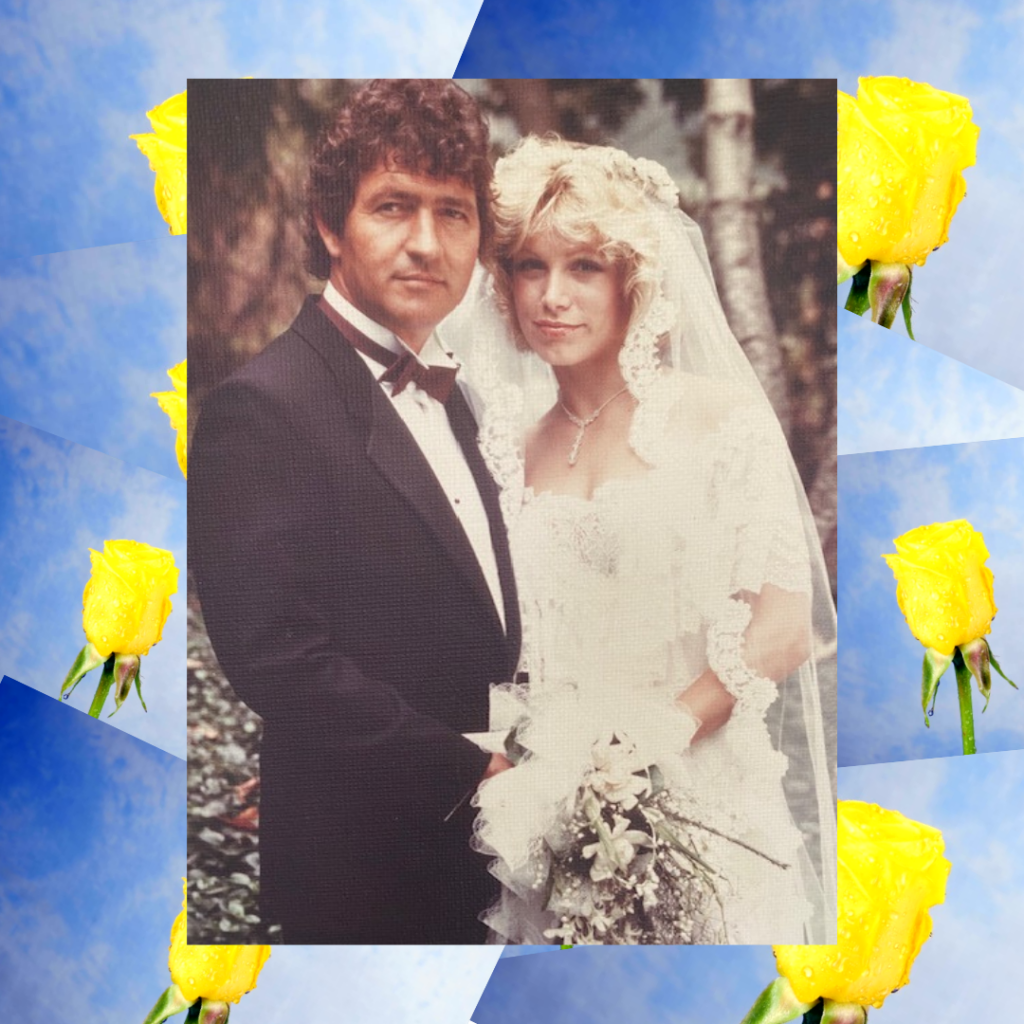
But the moment that made Davis face his alcoholism head-on was far less glamorous. It was a simple afternoon where he couldn’t play “helicopter” with his young son Noah for fear of dropping him. It was then he realized he needed to change—not just for himself but for his family. After a heartfelt talk with his wife, Lisë, and despite trying to quit on his own, Davis eventually acknowledged the need for professional help. In November 1991, he checked into the Betty Ford Clinic.

The Road to Recovery

Four months to the day after leaving rehab, Davis gave his first-ever sober performance in the Broadway production of “The Will Rogers Follies” at the Palace Theater. He continued to tour with the show for over a year, sharing his journey to sobriety after each performance and encouraging others to seek help. This marked not only a transformation in Davis’ career but also his life.

The Legacy of Sobriety

While Mac’s story serves as a cautionary tale, it is also an inspiring narrative of redemption. After years of battling alcoholism, Davis managed to reclaim not just his career but also his life, serving as a living testament to the transformative power of admitting one’s faults and seeking help. His story serves as a reminder that it’s never too late to change course, to break free from the chains that hold us back, and to rewrite our own stories.

If you or someone you know is battling addiction, do not suffer in silence. There is help, there is hope, and there is life—beautiful and fulfilling—after the last call.

The Irony of Success: How Dolly Parton and Mac Davis Wrote “White Limozeen”

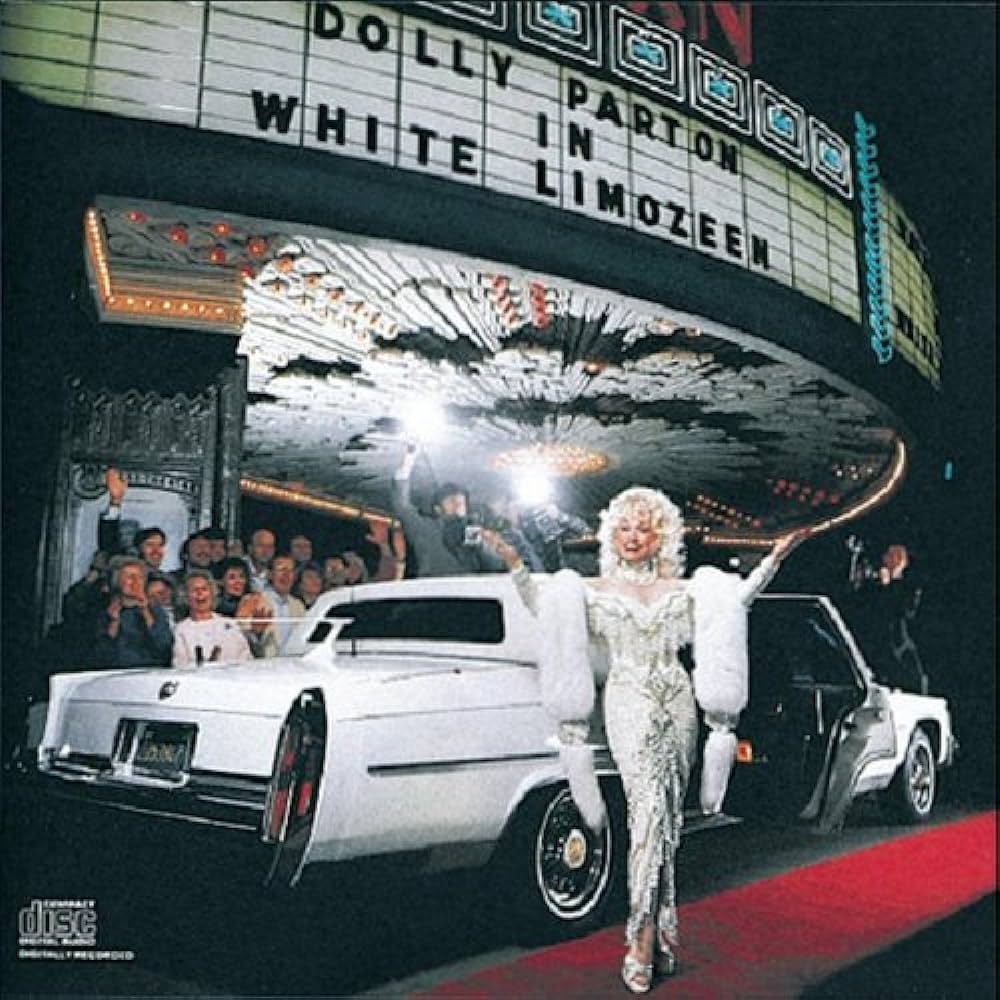
Dolly Parton, White LimozeenThe idea of “making it” has often been symbolized by the glitz and glamor of Hollywood, the big break, or even the white limousine—gleaming, opulent, and stretched beyond reason. What is less spoken of, however, is the irony that often accompanies success.
Picture this: Dolly Parton, a pillar in country music with a career veering into the decades, decides she wants to collaborate with Mac Davis, an iconic songwriter in his own right. She pulls up to his Bel Air residence, not in a family sedan or a cab, but a limousine, paid for by her studio. It’s then, in this theatrical moment, that Dolly realizes the irony—how ludicrous it sounds to say they should write “like they’re hungry” when they’re surrounded by the kind of comfort they could only dream of in their youth.

“White Limozeen,” the resulting song, was a poetic twist of fate, an encapsulation of this irony. The songwriting session became a dance of mutual admiration and creativity. Both Dolly and Mac matched each other line for line, a sort of symphonic dialog that ended up not just surprising but impressing them both. Dolly later penned this experience in her 2020 book, Songteller, giving us a glimpse into the minds of these complementary creators.

The decision-making didn’t stop at the songwriting, though. When it came time to pick a producer for the “White Limozeen” album, Dolly tapped Ricky Skaggs. A country artist primarily known for his own material, Skaggs was an unconventional choice. But Dolly trusted her gut, seeing in him a kindred spirit, someone who could harness the “old Dolly,” and create an album that was “really authentic sounding.” Her label and management might have been dubious, but Dolly was resolute.

In the song itself, there’s yet another layer of irony in the spelling of “limousine.” When Dolly was uncertain of how to spell it, Mac Davis suggested she write it as it sounds, giving birth to “limozeen.” A stylistic decision, yes, but also a nod to the many idiosyncrasies that defined their journeys, no matter how grand or humble they were.

The irony thickens when you delve into the lyrics of “White Limozeen,” a rags-to-riches story mirroring Dolly’s journey from a childhood of poverty in Tennessee to being the toast of Hollywood. The character in the song never loses her essence even when her circumstances change dramatically—a tribute to resilience and authenticity.

The story of “White Limozeen” is essentially a parable of American dreams and the surprising pathways they often take. It’s a tale where success is not just a gleaming limousine but also an understanding of where you’ve come from and the ironic twists that life inevitably serves you. It’s as though Dolly and Mac managed to distill not just their unique histories but the broader human experience into this one song, a piece of art steeped in both personal irony and universal truths.

Sometimes, it takes stepping back and embracing the ironies of life to produce something that, at its heart, is profoundly real.

Mac Davis in ‘North Dallas Forty’: More Than Just a Game

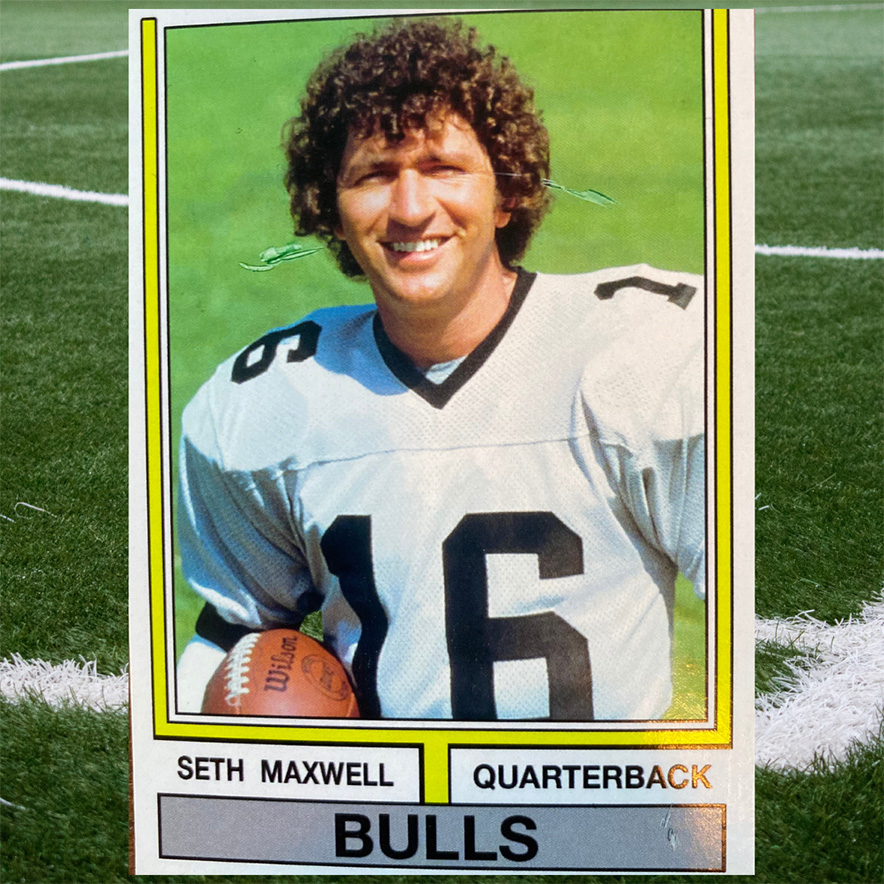
Mac Davis Football Bulls“North Dallas Forty” is not just a window into the world of professional football. It’s a reflection of the America of the 1970s, a time when racial divides scarred the very soul of the nation and even spilled onto the football fields. Behind every pass, touchdown, and tackle was a tale of segregation, ambition, politics, and change. The movie’s strength lies in its authenticity, drawn directly from the semi-autobiographical novel by Peter Gent, a former player for the Dallas Cowboys from 1964 to 1968.
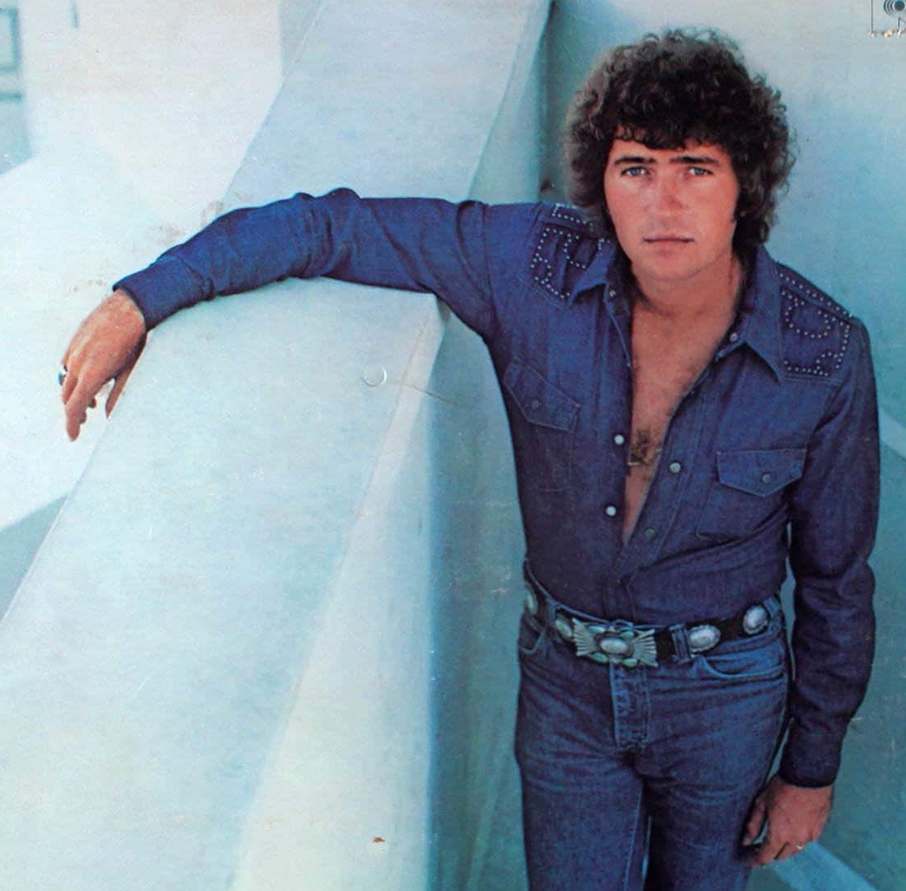
The significance of the title ‘North Dallas Forty’ is rooted in a sharp societal critique. In one interview, Gent expressed his shock at how Dallas could have an NFL franchise in 1964 while maintaining a stark racial segregation system. Black players were barred from living near the practice field in North Dallas, relegating them to south Dallas. “I kept asking why the white players put up with their black teammates being forced to live in segregated south Dallas,” Gent pondered. The grave injustice continued until Mel Renfro championed change, filing a ‘Fair Housing Suit’ in 1969.

The North Dallas Bulls, the film’s focal team, is a barely disguised depiction of the real-life Dallas Cowboys. Amidst this rich tapestry of 60s and 70s America, with its turbulence and racial tensions, one figure stands out: Seth Maxwell, played by Mac Davis.

For many, Mac Davis was the singer-songwriter from Lubbock, Texas, renowned for hits like “In The Ghetto.” Yet, in “North Dallas Forty,” Davis showed a different facet of his talent. Despite being primarily known for his music, his portrayal of Seth Maxwell, the quarterback, was nothing short of masterful. Intriguingly, the role was reportedly offered to Don Meredith, the very quarterback Seth Maxwell’s character is based upon. But destiny, it seems, had other plans.

Davis’s portrayal is a testament to his deep understanding of the character and the times. Seth Maxwell isn’t just a quarterback. He’s the embodiment of the era’s struggles — an easy-going ‘good ol’ boy’ who harbors a fierce determination to win. While his external demeanor may exude casual charm, inside churns a cauldron of ambition, politics, and an unwavering commitment to the game. Davis’s nuanced performance offers glimpses of this internal turmoil, brilliantly capturing the essence of Maxwell.

The film uses football as a metaphor to delve deeper into societal issues. As the glamourous quarterback, Davis’s Maxwell acts as the mediator between the management and the players, including his best friend, Phillip Elliott (played by Nick Nolte, representing Peter Gent himself). The tensions in their relationship symbolize the broader conflicts within the team and society. Maxwell’s famous line, “You had better learn how to play the game,” serves as a poignant reminder of the need to navigate not just the challenges on the football field but the larger game of life, racial politics, and societal expectations.

However, beyond the tackles and touchdowns, the film shines a light on the players’ personal lives. Through Maxwell’s eyes, we see the emotional toll, the physical demands, the sacrifices, and the small victories that come with being part of “America’s Team.” His interactions, friendships, rivalries, and romances form the backbone of the story, making it as much about human connections as it is about football.

To say Mac Davis was merely acting might be an understatement. He lived the character, bringing to the screen a rawness and authenticity that made Seth Maxwell memorable. For Davis, who hailed from Texas, football wasn’t an alien world. He understood the nuances, the hometown hero dynamics, and the sheer passion that fuels the sport. This insight enriched his portrayal, making it one of the standout performances in a film packed with stellar acts.

In retrospect, “North Dallas Forty” serves as a mirror to an era marked by change. While it beautifully captures the spirit and challenges of professional football, its true genius lies in its commentary on the societal shifts of the 1960s and 70s. And at the center of this narrative stands Mac Davis’s Seth Maxwell, reminding us that beneath the helmet and the pads, there’s a human story waiting to be told.


Mac and the Power of Improvisation: Starting with the Audience on The Mac Davis Show

Mac Davis Image 2In the 1970s entertainment scene, a pattern emerged. Scripted acts, planned sequences, and lip-synced songs dominated the stage. But what if there was another way? Mac Davis dared to ask that question. Instead of telling the audience what he thought they wanted to hear, he turned the question around: “What do you want to hear?” And thus, “The Mac Davis Show” revolutionized the essence of interaction and performance.
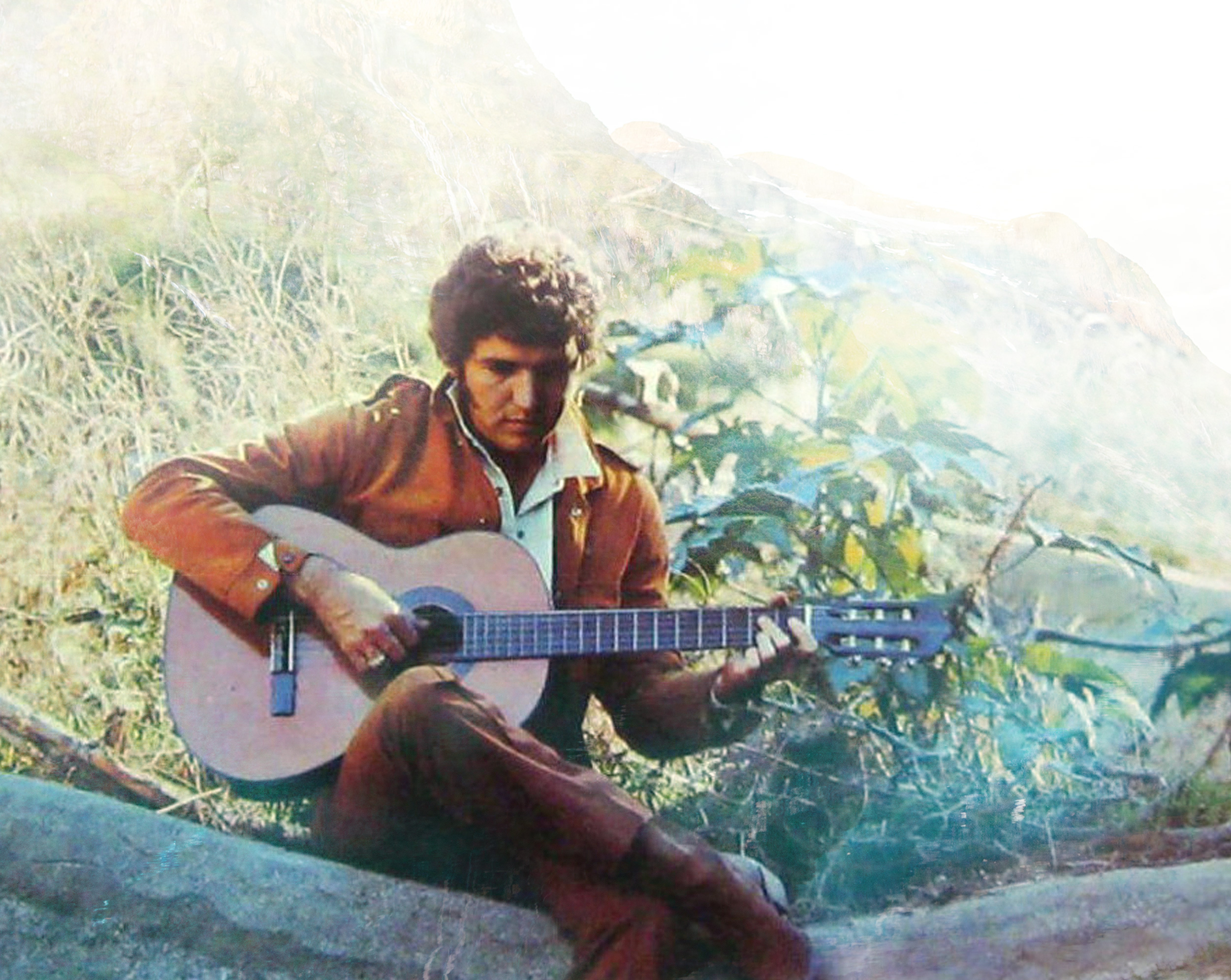
Amid the glittering array of 1970s variety shows, “The Mac Davis Show” carved a unique niche with its improvised song segment. Inviting the audience to share their thoughts, emotions, or even just a song title, Davis transformed their suggestions into impromptu melodies right on the spot. This distinctive feature not only showcased his incredible adaptability as an artist but also deepened the bond with his audience. Each episode became an unexpected journey, with Davis masterfully weaving audience sentiment into lyrical gold, proving that sometimes, the most resonant tunes are born in the spur of the moment.

Why the Unexpected Matters

Consider for a moment, the magic of the unpredictable. Mac Davis didn’t just see the audience; he involved them. They weren’t bystanders; they were the spark. Their words, their emotions, the titles they offered – these became more than just feedback; they were the canvas for Davis’ art. Every suggestion was an open door, a challenge, a path less traveled, and Mac, with enthusiasm, walked that path every time.

The Art of Improvisation: A Higher Purpose

Improvisation isn’t just thinking on your feet; it’s feeling with your heart, every pulse, every beat, every fleeting moment. Davis didn’t merely adapt; he embraced. By taking seemingly unrelated inputs and weaving them into heartfelt narratives, Davis demonstrated that art’s truest form might just be the connection it fosters, reflecting the collective heartbeat of humanity.

A Tapestry of Talents

But “The Mac Davis Show” was not just a one-man wonder. It was a symphony. A symphony where every musician, every note mattered. The ethereal mime performances by Shields and Yarnell, Ron Silver’s comedic genius, and the vibrant energy of Strutt – they all painted the backdrop for Mac’s magic.

Consider also the icons of that era who appeared on the show: Olivia Newton-John, the effervescent Osmonds, the timeless Tina Turner, and legends like Aretha Franklin, Ray Charles, and Bob Hope. Each of them didn’t just perform; they added a chapter to the evolving story that was “The Mac Davis Show.”

Connection: The Mac Davis Touch

Beyond the lights, beyond the stage, what truly sets an artist apart? It’s their ability to see themselves in the eyes of the audience. Davis wasn’t just a performer; he was one of us. He had this innate ability to resonate, to echo the sentiments of the everyday individual. It wasn’t about the spotlight, but the shared light between him and his audience. And in those improvised moments, that bond only grew stronger.

Artists come and go. But those who leave a mark are those who challenge the norm, who ask questions, and who truly listen. Mac Davis’ improvisational spirit on his show wasn’t just a display of talent; it was a declaration. A declaration that sometimes, the most powerful art is the one created in the moment, with the audience, for the audience. Because, after all, what is art if not a reflection of us?


The Songwriting Genius Behind Elvis: Mac Davis’ Early Career

Mac Davis Hero Image TabletIn the world of music and beyond, Mac Davis’ legacy is truly undeniable. His journey began as a gifted songwriter in the vibrant 1960s, crafting soulful melodies that resonated deeply with fans and fellow musicians alike. But it was his collaboration with the legendary Elvis Presley that truly set him apart as a force to be reckoned with in the music industry.

Before his meteoric rise, Mac found his footing at Nancy Sinatra’s company, Boots Enterprises, Inc. It was here that his talents flourished, and some of his most iconic songs were published. To avoid confusion with another esteemed songwriter, Mack David, he briefly adopted the pseudonym “Scott Davis,” a nod to his son’s name.

In the late 1960s, fate intervened, and Mac Davis caught the attention of Elvis Presley, who was on the lookout for fresh material to record. Davis’ unique blend of country, pop, and soul perfectly complemented Presley’s style, leading to a remarkable creative partnership that produced some of the King’s most memorable hits.

One such timeless ballad was “Memories” from Elvis’ 1968 “Comeback Special.” This emotionally charged song showcased Presley’s ability to convey profound feelings through music and left an indelible mark on listeners’ hearts.

Another remarkable composition, “In the Ghetto,” stands as a testament to both Davis’ and Presley’s careers. This socially-conscious song depicted the harsh reality of poverty and violence, signaling a new direction for Presley and highlighting Davis’ exceptional storytelling abilities.

Don’t Cry Daddy,” a tender ballad released in 1969, further solidified Davis’ reputation as a top-notch songwriter. The song’s heartfelt lyrics and Presley’s emotive performance struck a chord with audiences, propelling it to No. 6 on the Billboard Hot 100 chart.

And let’s not forget the infectiously upbeat “A Little Less Conversation,” originally featured in the film “Live a Little, Love a Little.” This collaboration exemplified the magic that happened when Mac Davis and Elvis Presley joined forces. The song experienced a resurgence in 2002 when remixed by Dutch DJ Junkie XL and featured in a global Nike ad, as well as in the promotion for the blockbuster movie “Ocean’s 11” starring George Clooney, Brad Pitt, Julia Roberts, Matt Damon, Don Cheadle, and seemingly every A-list actor. As a result, “A Little Less Conversation” reached No. 1 in multiple countries and captivated a whole new generation of music lovers.

Beyond shaping the trajectory of the King’s musical journey, Mac’s work with Elvis played a pivotal role in launching his own career as a singer and performer. His ability to craft songs that touched the essence of the human experience allowed both artists to form profound connections with their audience.

As we reflect on Mac Davis’ early career as a songwriter for Elvis Presley, we are reminded of Mac’s immense talent and the lasting impact he made on the music industry. His songs continue to be cherished by fans of both artists, a testament to the incredible gift he had for storytelling and the power of music to move our hearts and souls.

In celebrating Mac Davis and his contributions to the world of music, we are reminded of the timeless beauty that emerges when great artists come together, leaving an enduring imprint on the hearts of generations to come.